JEHANGIR NICHOLSON ART FOUNDATION
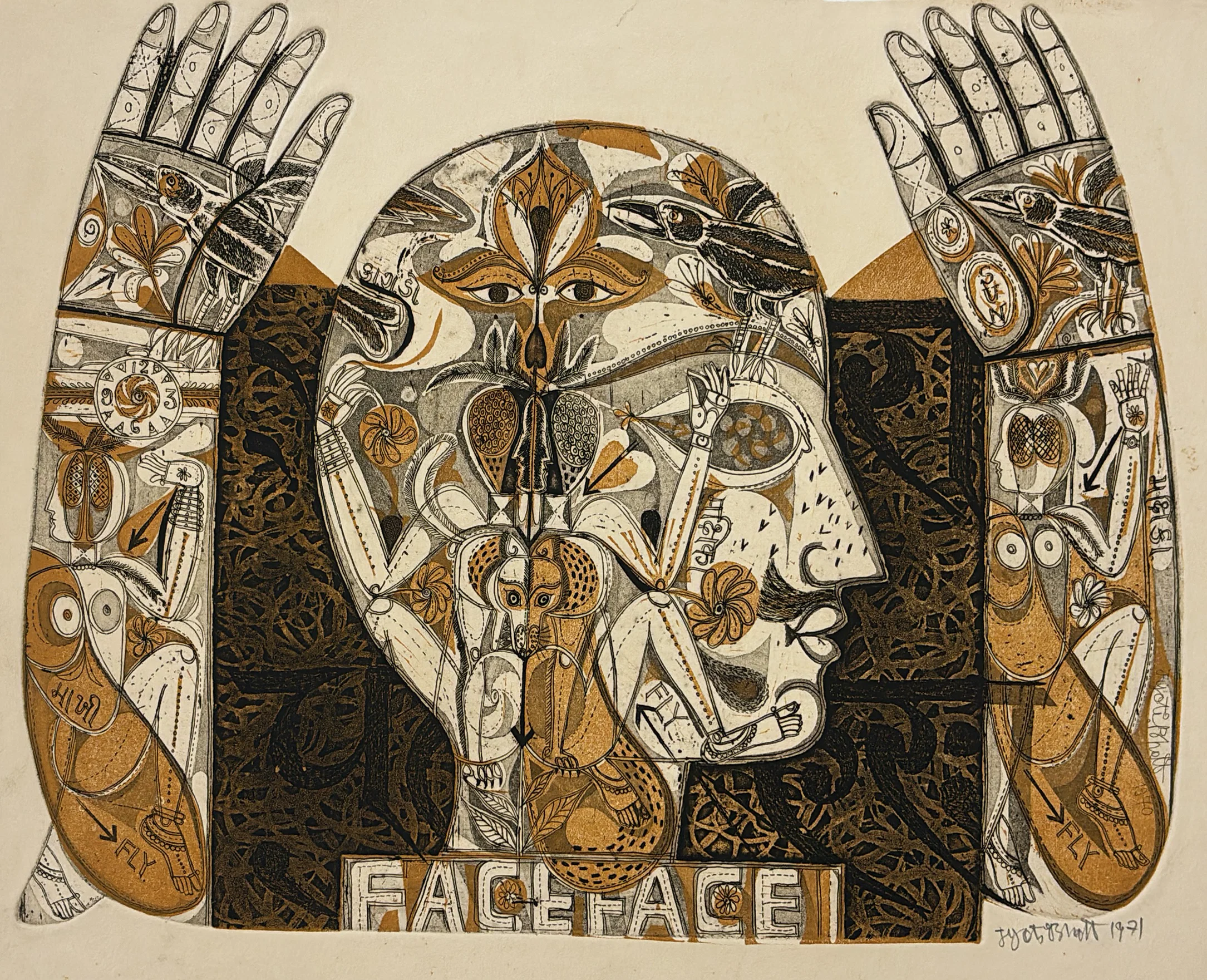
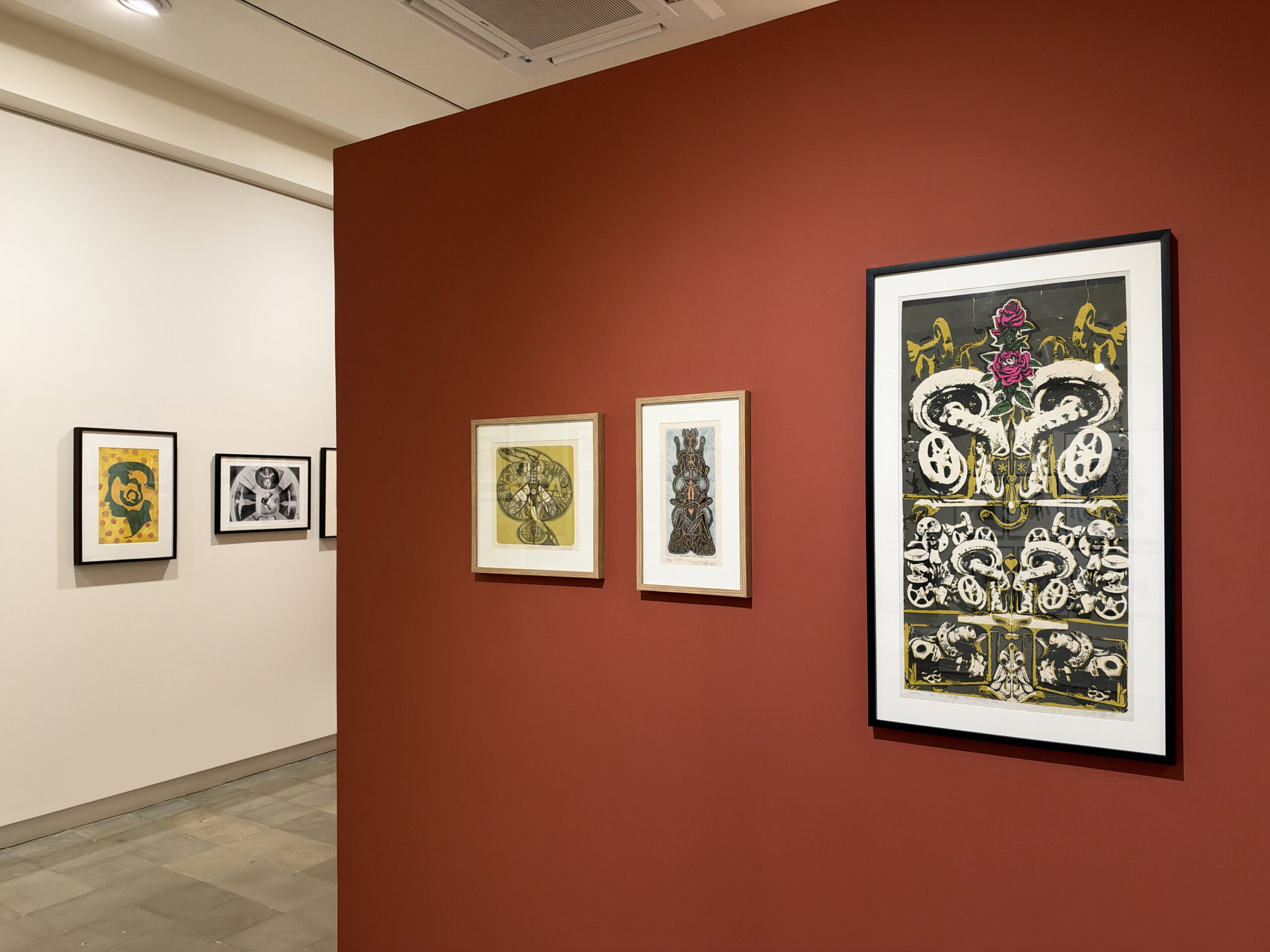
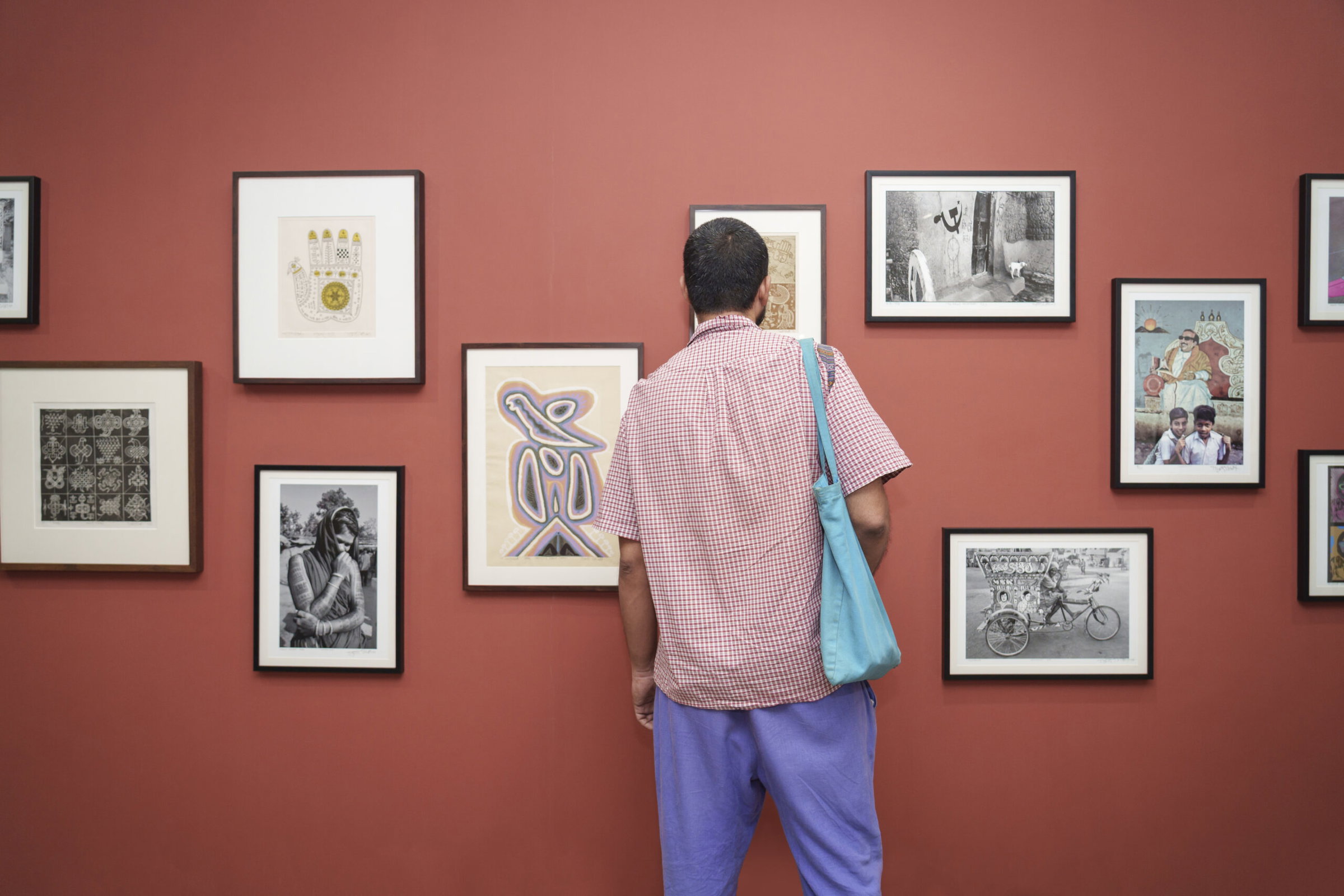
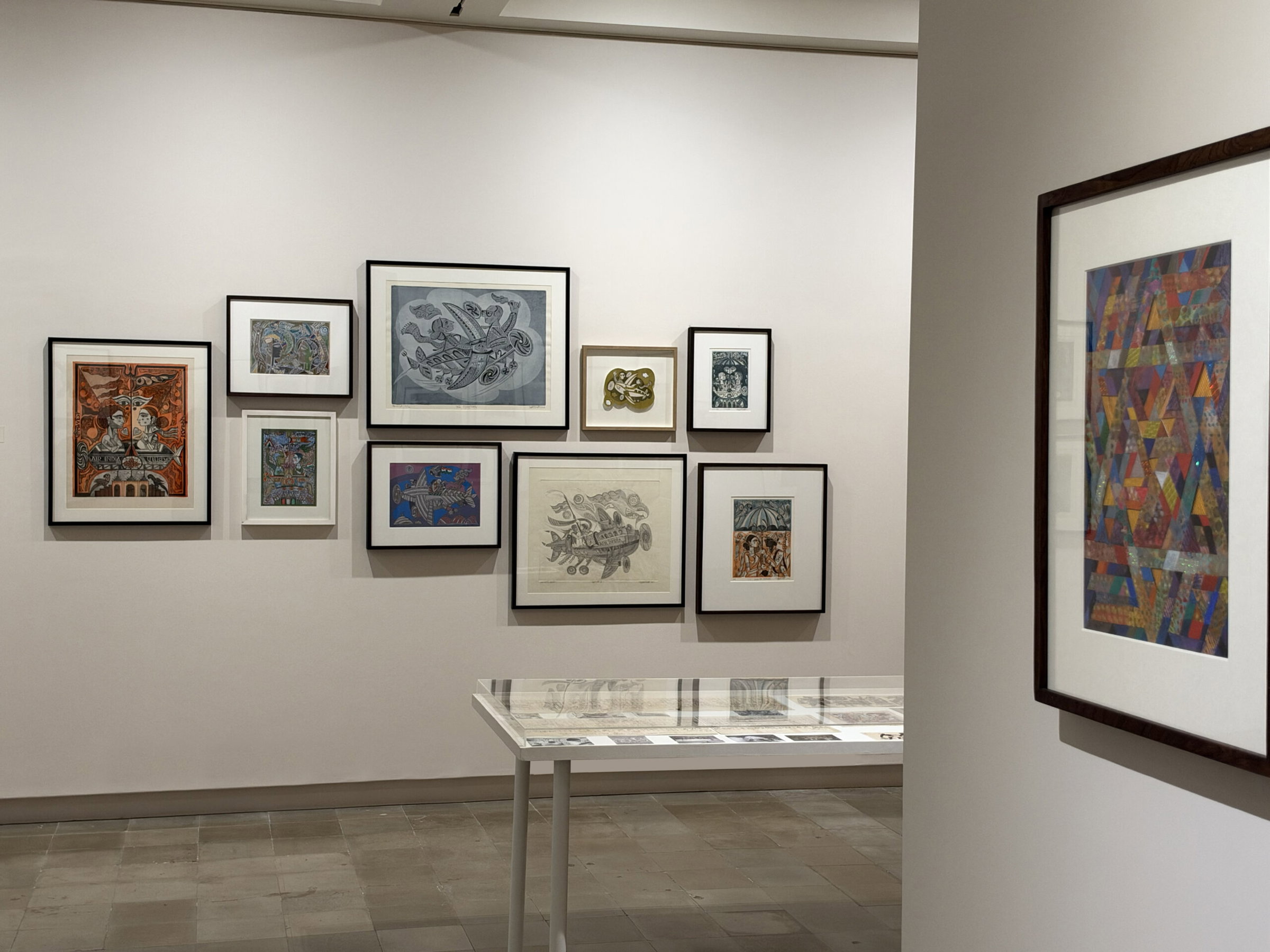
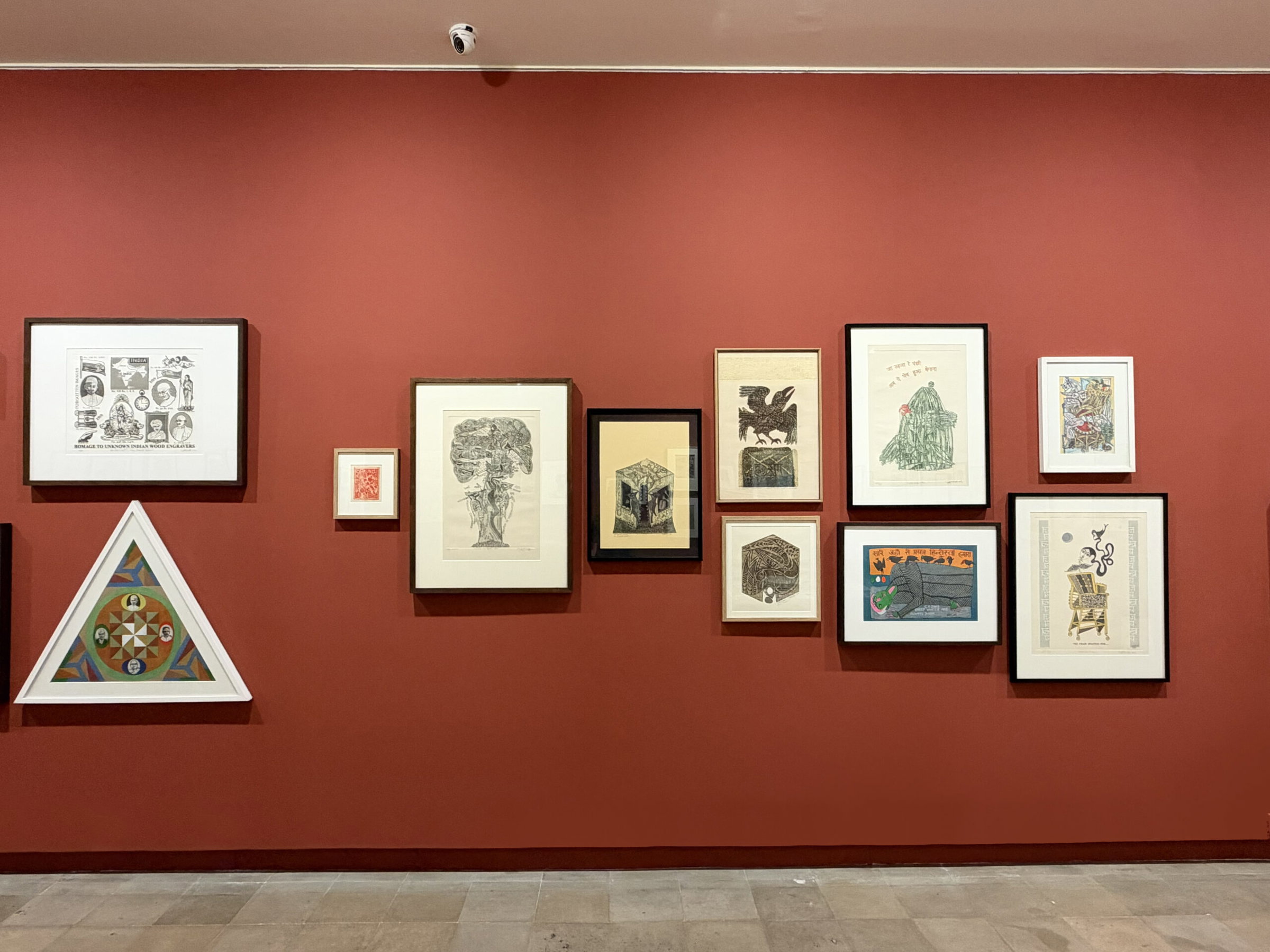
‘The Looking Glass’ traces the themes, images and processes across Bhatt’s printmaking, photography and painting. This exhibition frames the reciprocal relationship between his use of different mediums. In its playfulness, Bhatt’s practice unintentionally challenges categorisations of original and copy, past and present, documentation and intervention. Bhatt views the reproducibility in printmaking with curiosity, testing the possibilities, often revisiting and reworking on earlier plates, altering, painting or combining them with others.
A student of the first batch at the Faculty of Fine Arts, MS University, Baroda - the first art school established after Independence - Bhatt was part of an environment where ideas of Indian modern art developed through a conscious engagement with India’s craft and indigenous visual forms. Since 1966, Bhatt has photographed the living traditions of rural India. He is one of the first artists to extensively use the camera in his practice, starting in the 1950s. He also documented his colleagues and teachers, and his photographs are now regarded as the most extensive archive of art milieus and vernacular practices of the time.
Bhatt references surfaces on which domestic, social, political and cultural life is performed: the aangan, the street, the wall, the floor and skin, where rangoli, wall paintings, graffiti, tattoos, games, signs, songs and writing find expression. With a few contemporaries in Baroda, Bhatt began looking at local, pop and everyday urban imagery including painted rickshaws, shop signs, matchbox labels, printed charts and couplets on trucks. A visual linguist, Bhatt juggles a vast vocabulary of images and text, using humour and satire to chronicle happenings around him. His works have a design quality, drawing on the two-dimensionality of ritual diagrams.
Several of his works are reflections on the self. Unlike modernist existentialist depictions, Bhatt presents the self as a social and cultural being with works that are sumptuously kitsch, replete with references to local and personal experiences. Their meanings emerge by decoding images and symbols.
‘The Looking Glass’ invites a closer look at the connections between the personal and the social in Bhatt’s works. Inspired from lived experience, Bhatt’s practice presents the quirks and ironies of life and art.

A printmaker, photographer and painter, Jyotindra Manshankar Bhatt was born on 12 March 1934 in Bhavnagar, Gujarat. An alumni of the Faculty of Fine Arts, Maharaja Sayajirao University, Baroda, Jyoti Bhatt subsequently taught there from 1959 until his retirement in 1992. He also studied fresco and mural painting at Banasthali Vidyapith in Rajasthan and was commissioned to paint murals at Parliament House, New Delhi; Jyoti Ltd; Air India; Gwalior Mills; and the Zoological Department, MSU Baroda, among many others. In the 60s, he went to Italy under a government scholarship to study painting and printmaking at the Academia di Belle Arti, Naples, and then to the Pratt Institute, New York, on a Fulbright Scholarship and JDR IIIrd Fund Fellowship to study printmaking. Bhatt started the photo-documentation of the ‘Living Traditions of India’, producing over 50,000 photographs over three decades from the 60s. He experimented with cubism and pop art until he arrived at his own style inspired by Indian folk art.
Jyoti Bhatt joined Baroda in the first batch of the college in 1950 and was part of the early artist collectives. He was a part of the ‘Baroda Group of Artists’ and also a founding member of the ‘Group 1890’, and ‘Camera Pictorialists of Baroda’. His works have been part of exhibitions worldwide, such as the Sao Paulo Triennale of Arts, Brazil; Through Indian Eyes, Indian Photographer’s Show, Holland; Six Indian Photographers, Museum of Modern Art, Oxford, Painters with a Camera, Jehangir Art Gallery, Mumbai, etc. Bhatt’s works have been acquired by major private and public collections, such as the Museum of Modern Art, New York, USA; Smithsonian Museum, Washington D.C., USA; The British Museum, UK; Tate Modern, London; Uffizi Gallery, Florence, Italy; Lalit Kala Akademi, New Delhi; National Gallery of Modern Art, New Delhi; Tata Institute of Fundamental Research, Mumbai; Centre for International Modern Art, Kolkata, Jehangir Nicholson Art Foundation, Mumbai, etc.
Bhatt has won numerous prizes including the Presidents Gold Plaque at the 2nd National Exhibition, Lalit Kala Akademi; gold medal at the International Print Biennale, Italy; UNESCO Photo contest, Japan; and the ‘Fotokina’ World Photography Contest, Germany. In 2019, he was awarded the Padma Shri by the Government of India.
He lives in Vadodara.